


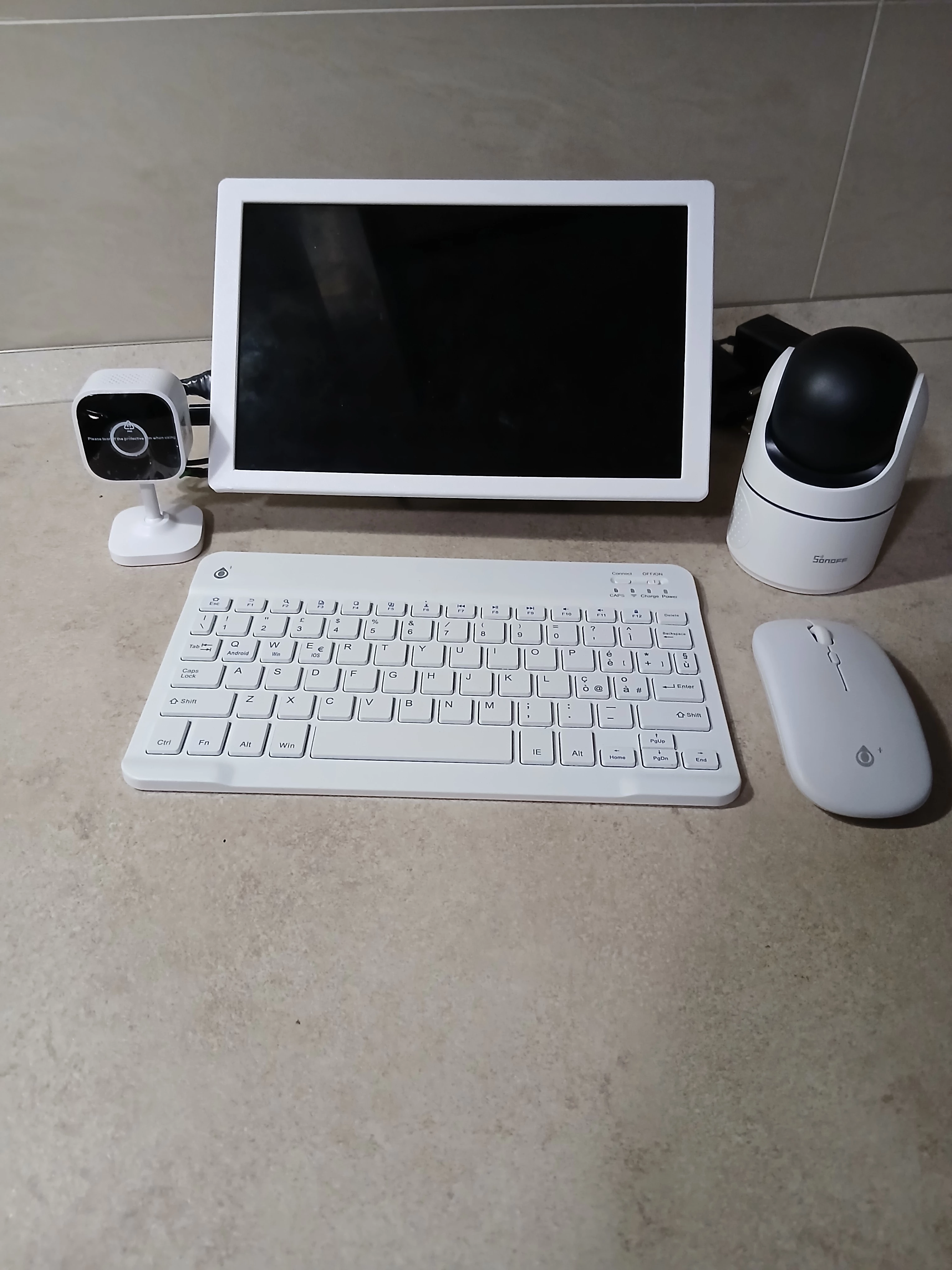
We have continued advancing the development of MedBot both in terms of design and functional integration, with a strong focus on improving its medical-oriented appearance and strengthening the connection between hardware, sensors, and artificial intelligence.
One of the first visible changes is the redesign of the MedBot case. The enclosure has been updated with a more medical look, including a white border and cleaner lines, reinforcing its identity as a healthcare-oriented device.
On the hardware side, we have connected the display provided by Axelera to the electronic mainboard and completed an initial software implementation that interfaces with our NEMA artificial intelligence through web-based communication. This enables MedBot to connect online to NEMA and start real-time interaction with its AI services.
We are currently testing AI functionalities that will support assistance and interaction within MedBot, validating communication flows and response behavior.
Starting from this weekend and continuing into next week, we will begin testing several sensors to evaluate their performance and reliability. The goal is to observe how NEMA processes sensor data, regulates and controls connected devices, and uses this information to:
provide suggestions or recommendations,
detect anomalies,
and generate useful data for operators and medical specialists.
In parallel, we will also start using cameras to perform early tests on environmental perception and basic biometric data acquisition of users.
This phase represents an important step toward practically validating the integration between AI, sensors, and vision systems inside MedBot.
We will continue sharing updates as testing progresses and new results become available.
Best regards,
Vito Traversa