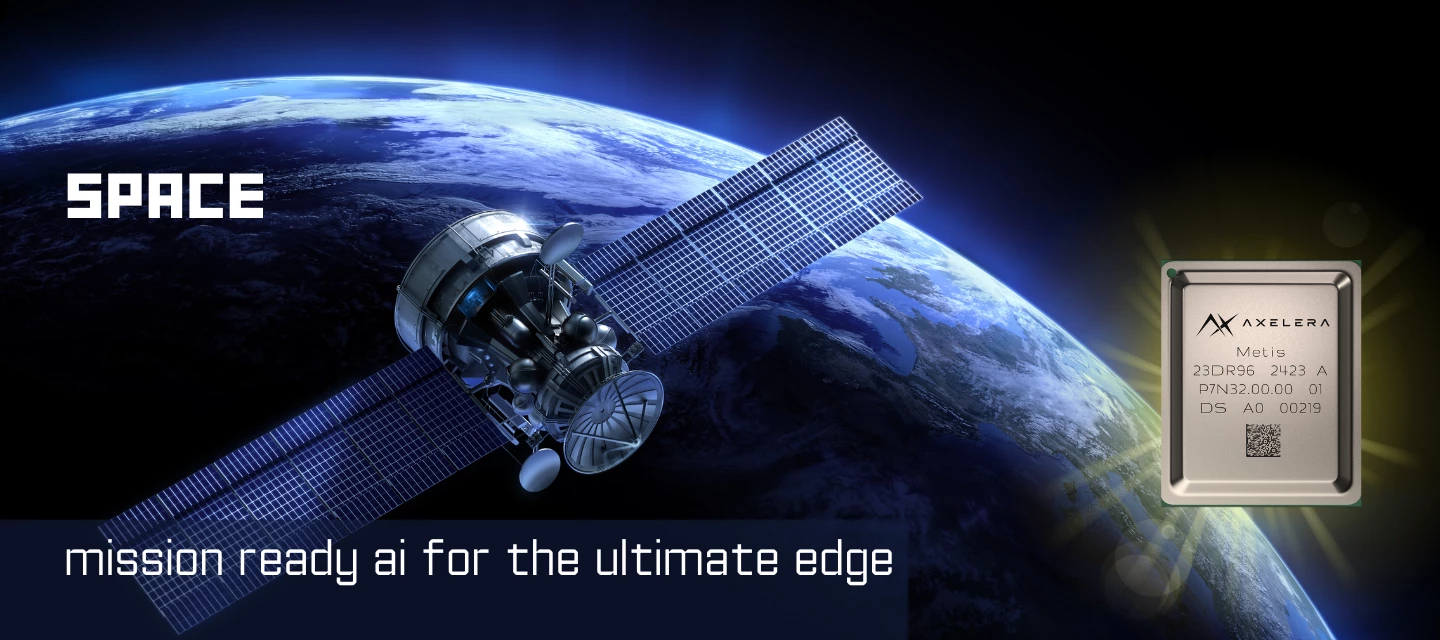


A new collaboration combines a decade of heritage in autonomous space systems, with AI’s cutting-edge processor technology, optimizing the next gen of intelligent space infrastructure.
Space exploration has always pushed the boundaries of human innovation. Today, as missions multiply and constellations become more complex, the demand for systems capable of autonomous reasoning and real-time adaptation continues to rise.
The answer lies in bringing artificial intelligence directly to space, and that's exactly why Axelera AI and AIKO are partnering to push onboard intelligence further, bringing together advanced software and processor technologies designed for the extreme conditions of space.
The Unique Challenge of Space AI
Operating AI in space isn't just about adapting terrestrial technology. The environment beyond Earth's atmosphere presents extraordinary challenges: extreme radiation that can corrupt computations, severe power constraints where every watt matters, and the impossibility of physical maintenance or updates. Most critically, windows of contact with Earth are limited, making continuous exchanges costly and highly resource-intensive; each communication requires careful planning. Spacecraft must therefore process data and make critical decisions locally, identifying anomalies, reacting to environmental changes, and maintaining operations independently.
“In space, timing is everything,” explains Lorenzo Feruglio, CEO of AIKO “When communication windows are short, autonomy isn’t optional: it’s what keeps missions efficient and resilient.”
The Growing Urgency of Satellite Autonomy
Closer to home, Earth's orbital environment is becoming increasingly crowded. According to the European Space Agency, approximately 15,860 satellites currently orbit our planet, with about 12,900 still active. This congestion is only accelerating. Goldman Sachs estimates the satellite market will grow sevenfold over the next five years, with 70,000 low Earth orbit satellites expected to launch during that period.
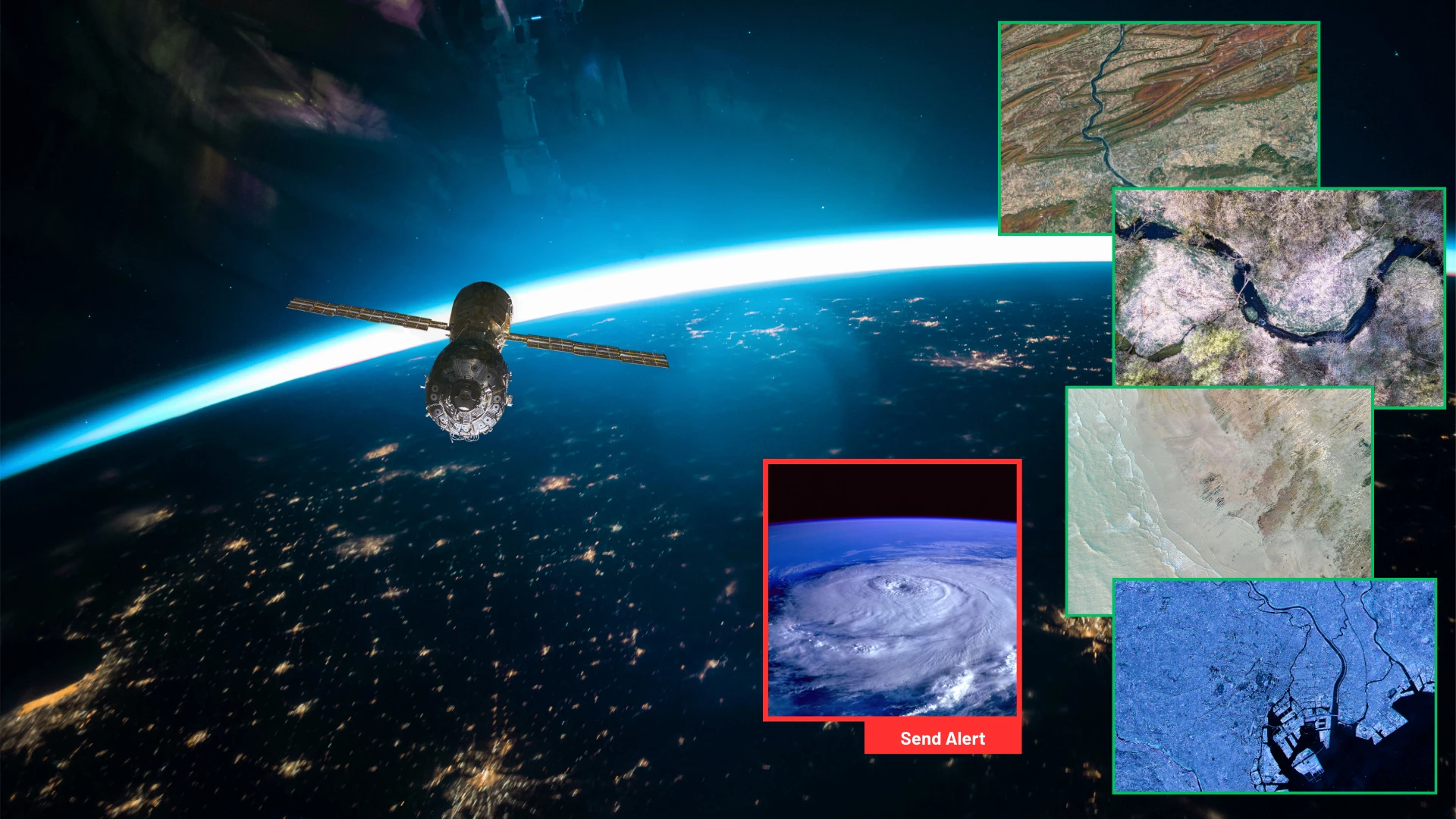
This explosive growth creates two critical challenges. First, satellites must navigate autonomously through an orbital freeway crowded with other spacecraft, rockets, and debris. Only onboard AI can execute the split-second maneuvers needed to avoid collisions that would create thousands of dangerous fragments. Second, these satellites generate massive volumes of data. Today, Earth observation satellites transmit raw imagery to ground stations where humans or AI datacenters search for critical information like emerging wildfires, severe weather patterns, or agricultural intelligence. By embedding AI inference directly into satellites, spacecraft can analyze data onboard and transmit actionable intelligence immediately rather than terabytes of raw images. A satellite detecting a wildfire's heat signature can alert authorities with precise coordinates while the fire is still containable, rather than waiting for ground analysis.
A Partnership Built on Complementary Strengths
With over ten years of experience developing AI-driven autonomy for satellites and spacecraft, AIKO has built flight-proven software that enables onboard decision-making across multiple missions. Its processor-ready architecture is designed to maximize performance while respecting the demanding power and safety requirements of space operations.
Axelera AI contributes state-of-the-art processor technology designed for exceptional performance per watt - a critical metric for space applications. Their processors enable real-time AI inference at the edge, processing massive amounts of data where bandwidth back to Earth is precious and limited.
This collaboration represents more than just a technology integration. Together, the two companies create a stronger foundation for in-orbit autonomy: AIKO’s heritage and flight-proven software stack integrated with Axelera AI’s processors precision-engineered to sustain advanced inference in constrained environments.
Transforming Space Operations
This collaboration aims to accelerate the adoption of intelligent, self-reliant spacecraft, capable of processing data onboard, prioritizing insights, and optimizing their missions without waiting for ground intervention.
From autonomous maneuvering and adaptive scheduling to real-time data analysis, onboard AI enhances mission reliability, reduces latency, and makes satellite operations more scalable than ever before.
Crucially, this partnership lays the groundwork for chip-plus-software solutions ready for space qualification, bridging the gap between Earth-based AI capabilities and the operational realities of orbit.
Autonomous Mission Adaptation: Satellites equipped with onboard AI can modify their operations in real-time based on observations, weather patterns, or unexpected events – without waiting for ground control intervention.
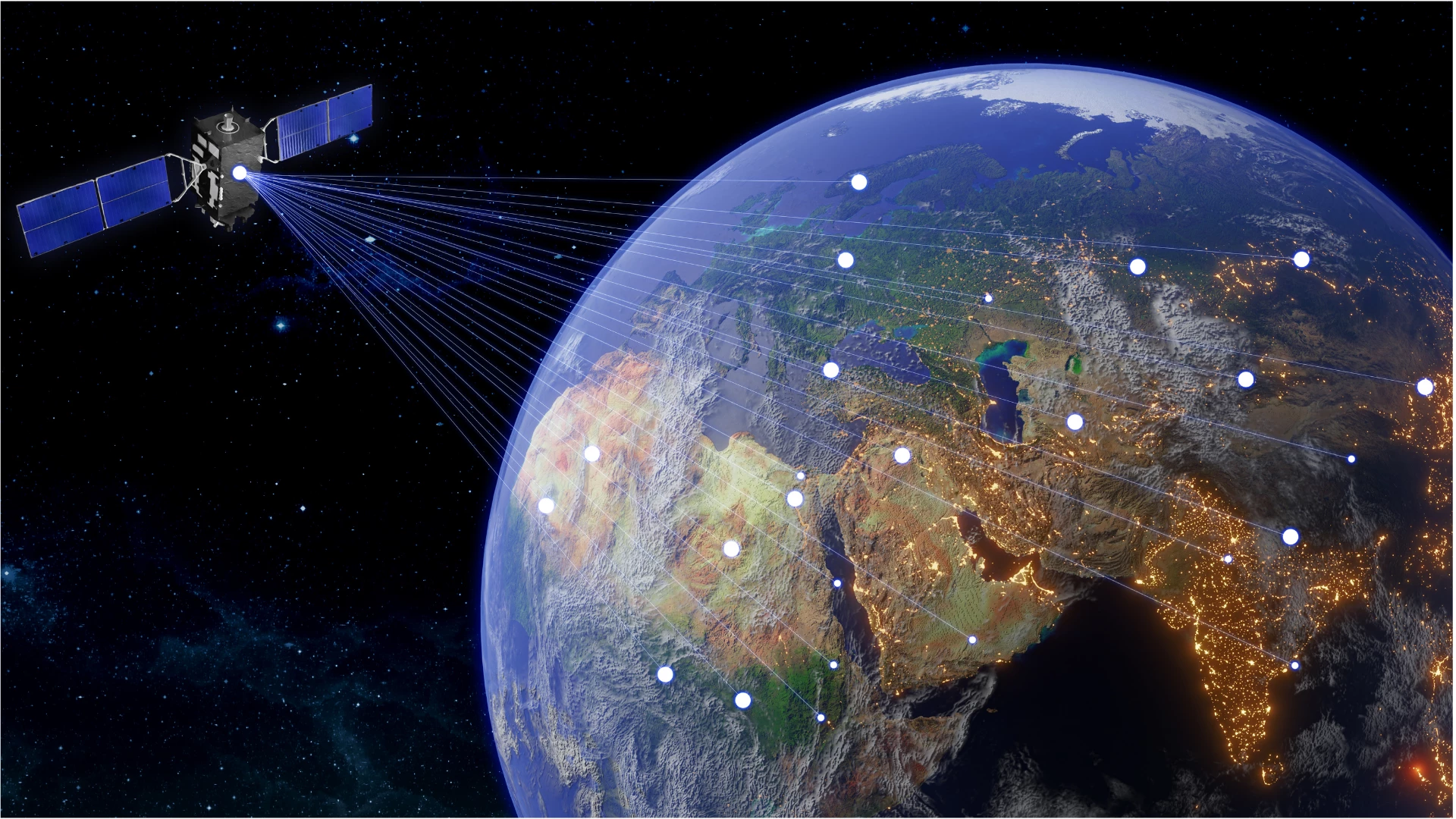
Efficient Data Processing: Instead of transmitting raw data back to Earth for analysis, spacecraft can process information onboard, sending only the most relevant insights. This dramatically reduces bandwidth requirements and accelerates decision-making.
Enhanced Reliability: AI-powered predictive maintenance can identify potential system issues before they become critical, enabling proactive responses that extend mission lifespans.
Scientific Discovery: Autonomous systems can identify and investigate unexpected phenomena immediately, rather than waiting for human analysis that might come too late to capture fleeting events.
Looking Ahead
As we stand on the cusp of a new era in space exploration – with planned missions to Mars, expanding lunar presence, and growing satellite constellations – the need for intelligent, autonomous space systems has never been greater. The partnership between Axelera AI and AIKO represents a significant step forward in making these ambitions reality.
By combining AIKO's processor-ready software solutions with Axelera AI's cutting-edge hardware designed for the extreme conditions of space, this collaboration is actively deploying the technologies that will define how future satellites and spacecraft operate.
The next generation of space missions won't just carry AI as an experiment – they'll depend on it as a critical capability for success. Through partnerships like this, the European space industry is positioning itself at the forefront of this transformation, ensuring that as humanity reaches further into space, our machines can think, adapt, and explore alongside us.