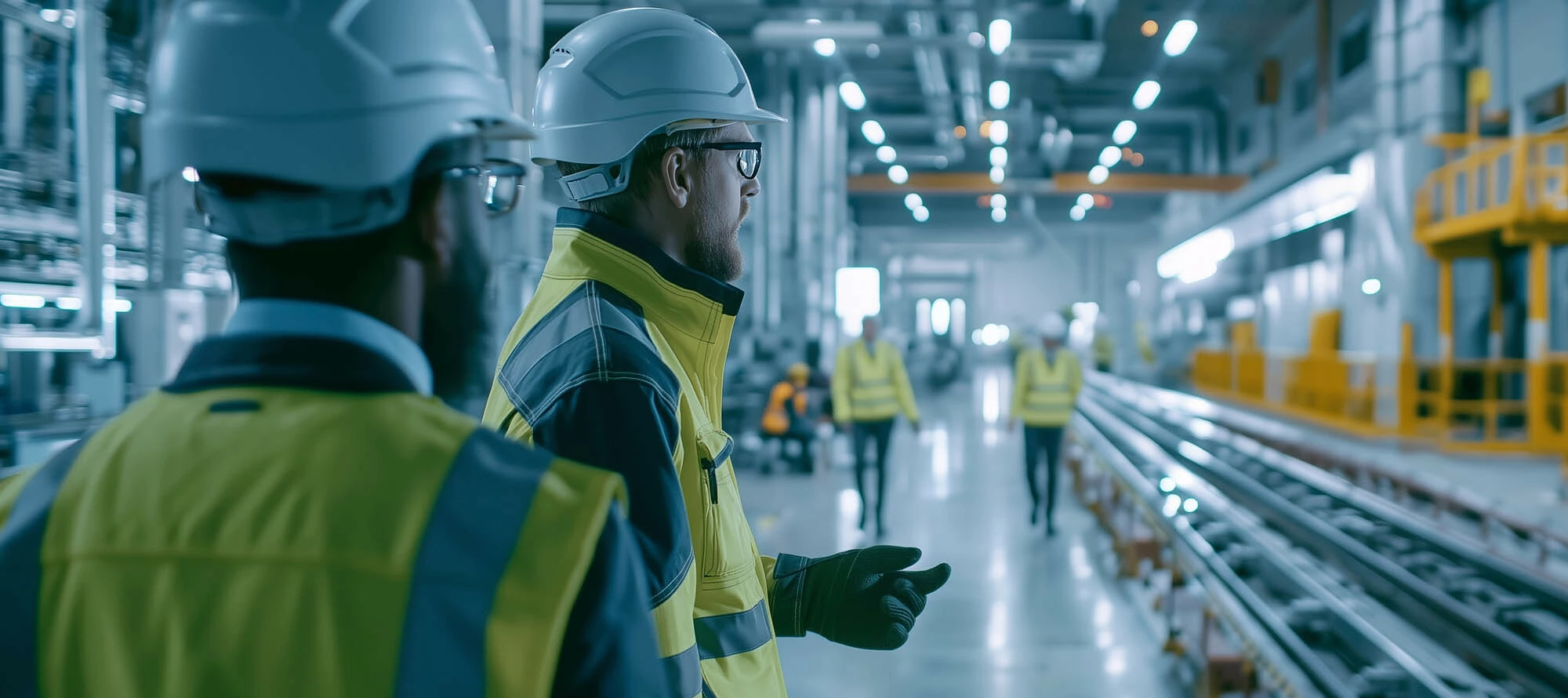

Ultralytics published a case study on WG Tech Solutions cutting worker safety violations by 28% in a factory, using Ultralytics YOLO running on Axelera Metis®. It's a good read and well worth your time: WG Tech Solutions cuts safety violations by 28%. In fact, start there, and then come back and pick up with the post below. What follows is your behind-the-scenes sneek peek.
It's a customer story over at Ultralytics, so it does what customer stories do and leads with the result. The build, the part most people on this community are looking for, sits just out of frame. But luckily for us, the WG Tech team (
Not One Card. The Whole Metis Range
One of the most interesting aspects of the excellent project is that the WG Tech team didn't standardise on a single piece of hardware. They deployed across Metis M.2 cards, PCIe cards, and the Compute Board, choosing the form factor to match the use case and the edge applications within. Compact edge boxes out at the stations, higher-performance PC-based setups where they needed more headroom.
So the same Voyager® pipeline runs across all three, and they're not rewriting the inference layer when moving from an M.2 in a small enclosure to a PCIe card in a workstation. That prospect is really appealing when you're the one maintaining a fleet across mixed hardware.
The Architecture
The platform they built is called DeepInsight, and its shape is worth understanding because it's a pattern that can be applied across a huge number of industry verticals.
cameras → Voyager SDK inference → annotated outputs and events → rule-based alert logic → dashboards, alerts, storage
Voyager sits in the middle doing the heavy lifting; decode the streams, run the models, hand back detections. DeepInsight wraps everything around it, handling multi-camera input, multiple models, the rules that decide what counts as a violation, and where the alerts go (email, messaging, role-based dashboards). Inference happens locally, nothing has to leave the edge to get a result.
If that loop looks familiar, it should. It's the same basic shape we’ve seen people here run at home with a couple of cameras and Home Assistant. WG Tech have just scaled it (expertly) to multiple stations across a factory with production alerting bolted on top.
45 Models, On Purpose
The most notable decision in the stack was that WG Tech didn't build one clever general-purpose model. They built around 45 of them.
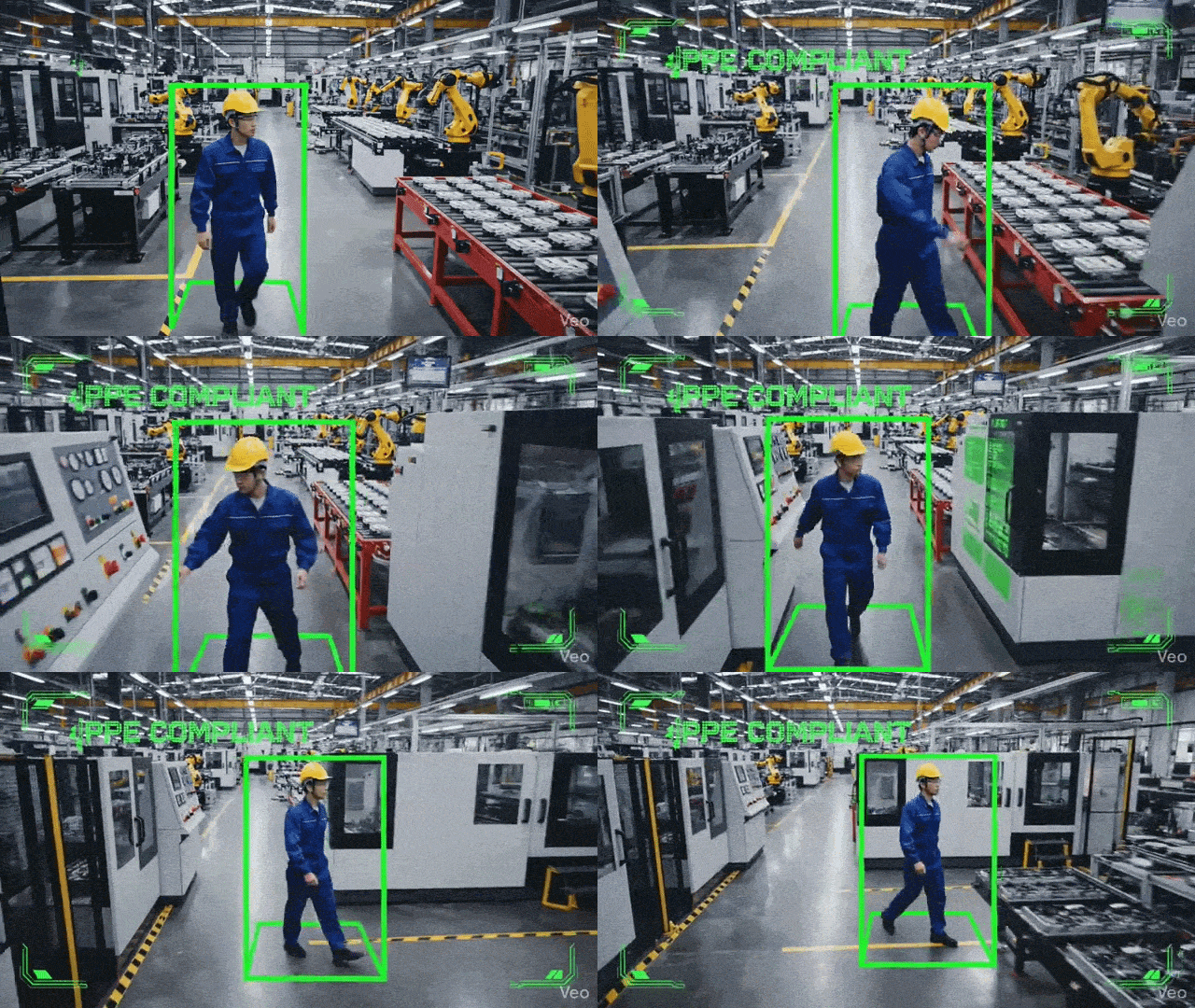
Each is trained for a specific job:
- PPE detection
- Safety zone monitoring
- Process validation
- Missing part detection
- Defect inspection
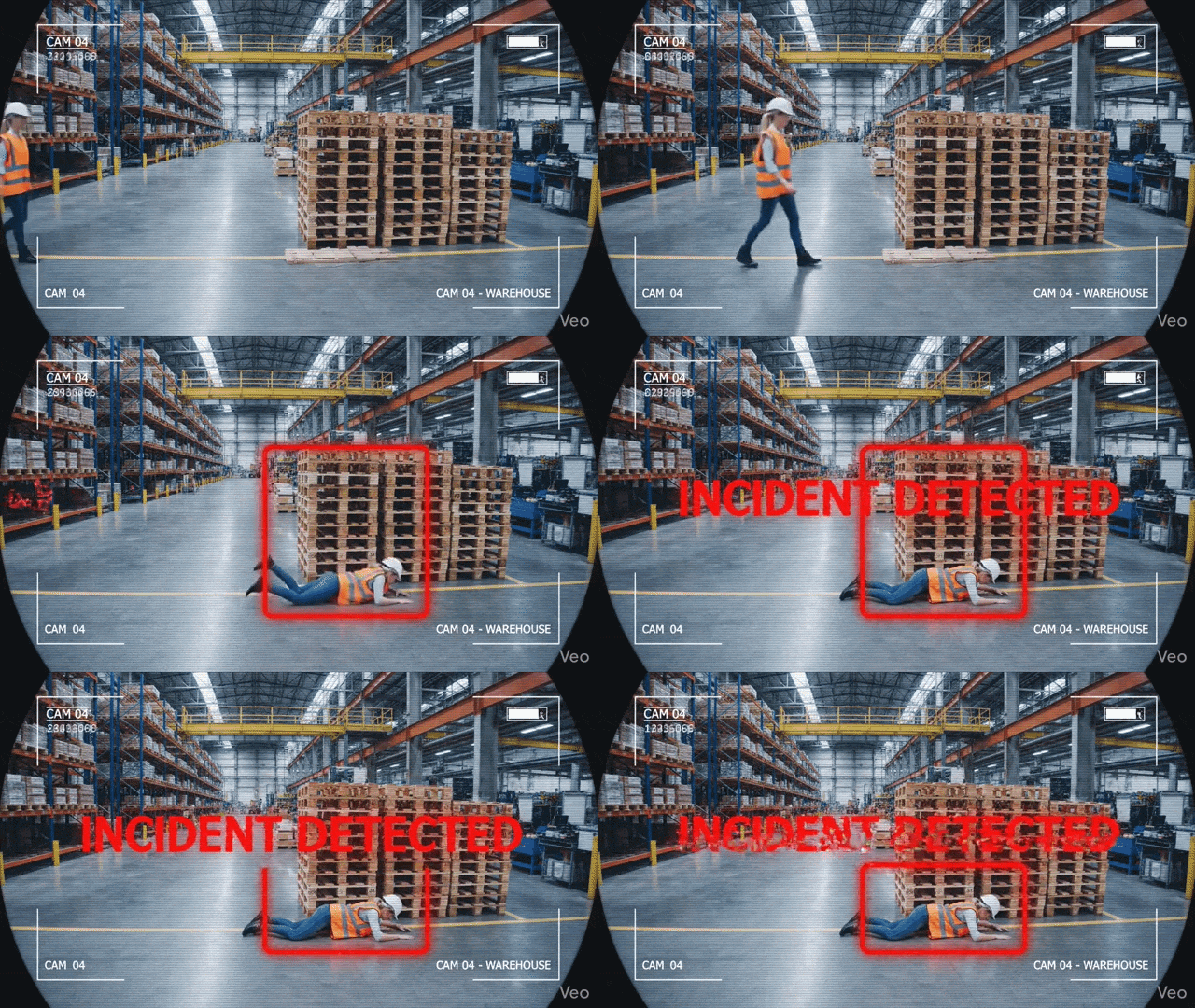
- People monitoring
- Security analytics
And they're tuned to the conditions they run in, the camera angle, the station layout, the object size, the workflow and more.
Every manufacturing station presents unique lighting conditions, camera angles, object sizes, background clutter, and operational workflows. Rather than forcing one generic model to solve every problem, WG Tech develops highly specialised models tuned for individual production processes, resulting in significantly higher accuracy and fewer false alarms.
It's a deliberate trade-off. One generic model is easier to manage, true, but a generalist struggles when a job depends on a tight camera angle or small objects. A library of specialised models means more to train, version and deploy, but each one does its single job well and you only run the model you need, right where you need it, while DeepInsight automates this complexity, by maintaining centralised control across the entire factory. For accuracy-sensitive work like safety compliance, that's arguably the right call.
Ultralytics YOLO11 and Ultralytics YOLOv8. Why Both?
They used both, and the split is pragmatic rather than dogmatic:
- Ultralytics YOLO11 for newer use cases where they wanted the accuracy and performance gains
- Ultralytics YOLOv8 for existing pipelines that were already trained, tested and working in production
In other words, if it works, don’t fix it. Validated pipelines stayed on Ultralytics YOLOv8 rather than getting reworked for the sake of running the latest release just because it’s new. Then any new detection tasks got Ultralytics YOLO11. The choice came down to the use case, camera position, object size and the accuracy each task demanded. You only need the performance you need, after all.
They also made great use of other models, such as the open-source FaceNet architecture customised to run well on Axelera hardware. Every model undergoes optimisation for Axelera hardware using Voyager-compatible deployment pipelines. WG Tech validates accuracy, latency, throughput, and power consumption before production rollout, ensuring every deployment meets customer-specific SLAs. If you can get a model to ONNX and through Voyager, you're not limited to the detection family. This huge deployment proves the benefit of selecting your tools carefully.
Performance, the Honest Version
For one representative safety monitoring use case, WG Tech measured up to 25 to 30 FPS per video stream in internal validation, with end-to-end alert latency sitting comfortably inside the needs of factory monitoring (the alert fires right after detection and rule validation). They've been clear that exact FPS, latency and power all shift with form factor, stream count and model complexity, so detailed benchmark numbers don’t really tell the story. There’s no single set of numbers across an entire factory floor.
Per-stream throughput on real footage, with real pre and post-processing in the loop, is the number that actually means something when you're planning a deployment like this.
What We Can Take From It
If you're building in this space, the key learnings are plentiful:
- Match the Metis form factor to the deployment, but keep the Voyager pipeline the same
- Specialise models per task and per condition when accuracy matters more than tidiness
- Don't rebuild working pipelines just to chase a version number
- Treat inference as one block inside a larger app, with your own rules and alerting around it
- ONNX plus Voyager gets alternative architectures onto the hardware too
The Voyager SDK is on GitHub if you want to start from the same inference layer, the examples cover cascaded pipelines for chaining detection with tracking or a second model, and Ultralytics has an awesome Axelera export and deployment guide if you're coming at it from the Ultralytics YOLO side.
Over To You
Big thanks to the WG Tech team for sharing the details here. Go read the original Ultralytics case study for the business side, and have a look at all the cool stuff WG Tech does every day.
If you were architecting factory-scale safety monitoring, would you go specialist like WG Tech with dozens of task-specific models, or fight to keep it down to a handful of generalists?
Drop your thoughts below.
About WG Tech & DeepInsight
WG Tech Solutions develops enterprise Edge AI platforms that transform computer vision models into production-ready business applications. Its flagship platform, DeepInsight, provides the complete software stack for deploying and managing Vision AI at scale—including camera management, AI inference orchestration, model lifecycle management, rule-based automation, alerting, dashboards, storage, and enterprise integrations. Supporting dozens of specialized AI models across heterogeneous edge hardware powered by Axelera's Metis AI accelerators and Voyager SDK, DeepInsight enables organizations to deploy reliable, scalable, and customizable AI solutions that deliver measurable operational improvements across manufacturing, safety, security, retail, and logistics.